 Literess
How much does a beta reader, a manuscript assessment or a developmental edit cost?
What feedback on a 90,000-word novel costs in 2026, from free beta readers and AI reports to a manuscript assessment and a developmental edit, with each rate from its source, and how to budget for the ones you need.
 Mariia Ivakhnenko
 Vitalii Vlasiuk6 min read
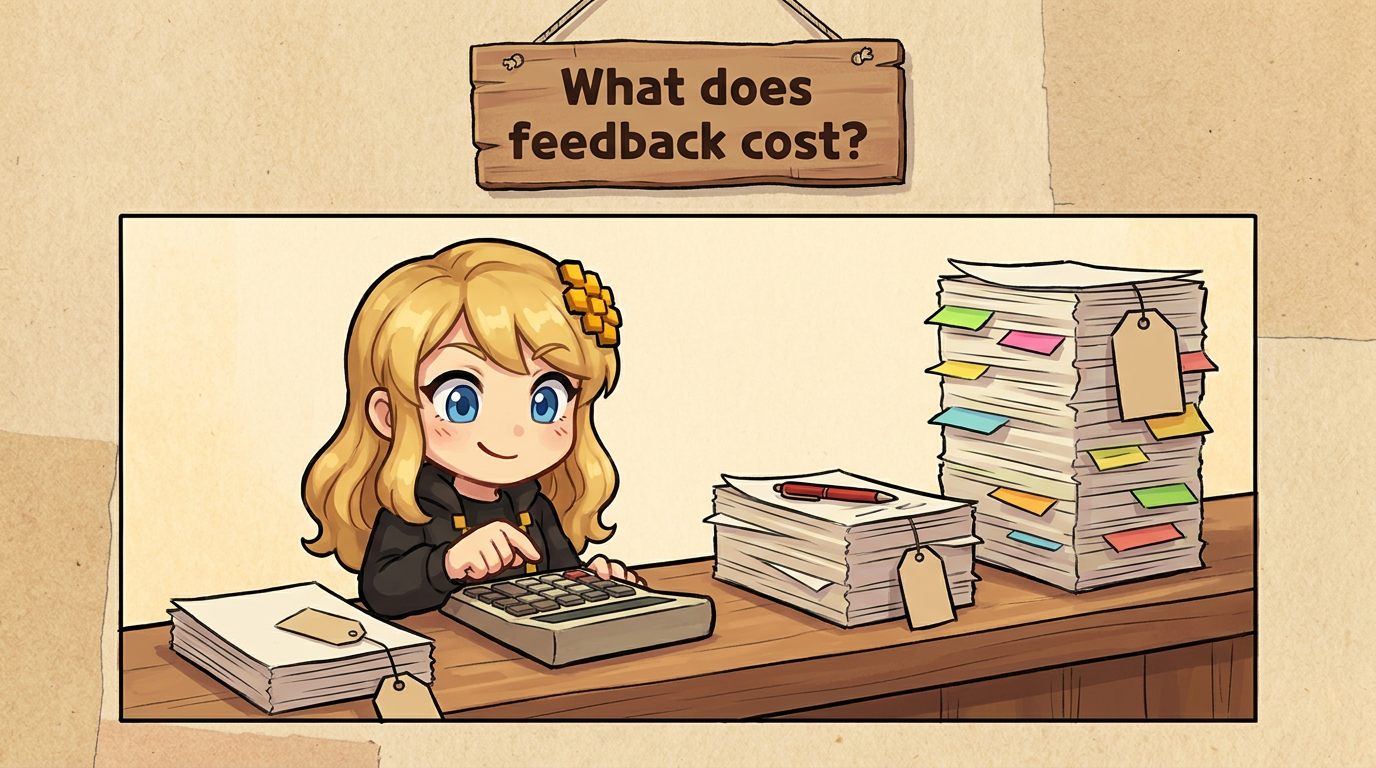
For a 90,000-word novel, feedback runs from free to over $4,000. Human beta readers are usually volunteers. An AI report costs $30 to $50. A professional beta read is about $450 to $720, a manuscript assessment about $1,350 to $2,600, and a developmental edit about $2,300 to $4,800, at the rates professional editors publish. Most writers need two or three of these, at different stages, not all of them at once.
What does each kind of feedback do?
They answer different questions, and the expensive ones are worth more once the cheap ones have done their work. Every term is also in our writing glossary.
- A beta reader tells you how the book reads: where they got lost, bored or moved. They don’t tell you how to fix it.
- A manuscript assessment (or editorial assessment) is a professional reading of the whole book and a report on its big strengths and problems: structure, character, pace, market. It doesn’t mark up your pages.
- A developmental edit is the assessment plus detailed notes through the manuscript on how to fix what doesn’t work. It is the most thorough and the most expensive.
- Line editing, copyediting and proofreading come later, once the story is settled.
What do professional editors charge?
The Editorial Freelancers Association (EFA) publishes median rate ranges from a survey of over 1,100 editors, covering 2025 work. For fiction:
| Service | Per word | Per hour | 90,000 words (our arithmetic) |
|---|---|---|---|
| Beta reading | 0.5 to 0.8¢ | $50 to $70 | $450 to $720 |
| Manuscript assessment | 1.5 to 1.8¢ | $40 to $54 | $1,350 to $1,620 |
| Developmental editing | 3.0 to 3.5¢ | $52.50 to $70 | $2,700 to $3,150 |
| Line editing | 2.7 to 3.5¢ | $50 to $60 | $2,430 to $3,150 |
| Copyediting | 2.0 to 2.7¢ | $40 to $50 | $1,800 to $2,430 |
| Proofreading | 1.2 to 2.0¢ | $35 to $45 | $1,080 to $1,800 |
Source: EFA 2026 rate chart. Assessment and beta-reading rates aren’t split by fiction and non-fiction.
Reedsy, a marketplace for freelance editors, publishes rates from the quotes on its platform: editorial assessment 1.8 to 2.9¢ a word and developmental editing 2.6 to 5.3¢, with an average of 3.6¢. For 90,000 words that is about $1,620 to $2,610 for an assessment and $2,340 to $4,770 for a developmental edit (our arithmetic).

What does a manuscript assessment cost in the UK?
Two UK services publish their fees for a full manuscript:
| Service | 90,000-word novel | Turnaround |
|---|---|---|
| The Literary Consultancy | £890, VAT included (£650 up to 60,000 words, plus £8 per 1,000 above; our arithmetic) | Not stated; express in 10 working days for 40% more |
| Jericho Writers | £785 standard, £985 express (the 85,001 to 90,000-word band) | 4 weeks standard, 2 weeks express |
What do AI readers cost?
| Option | What you pay | What you get |
|---|---|---|
| Marlowe (Authors A.I.) | Free basic report; $29.95 for Pro | A developmental report in a few minutes |
| ProWritingAid Virtual Beta Reader | $50 a report at list price | A reader-response report in a few minutes, up to 300,000 words |
| Literess | Free: 10,000 credits a month. Paid from €10 a month | A reader you question about any page; in our test, reading a 27,500-word draft whole for contradictions used 2,950 credits |
| ChatGPT, Claude, Gemini | Free plans; about $20 a month for more | A conversation about the file you attach |
An AI reader can’t replace a professional assessment, but it can make one go further: an editor paid by the word shouldn’t spend your money on contradictions a machine could have caught.
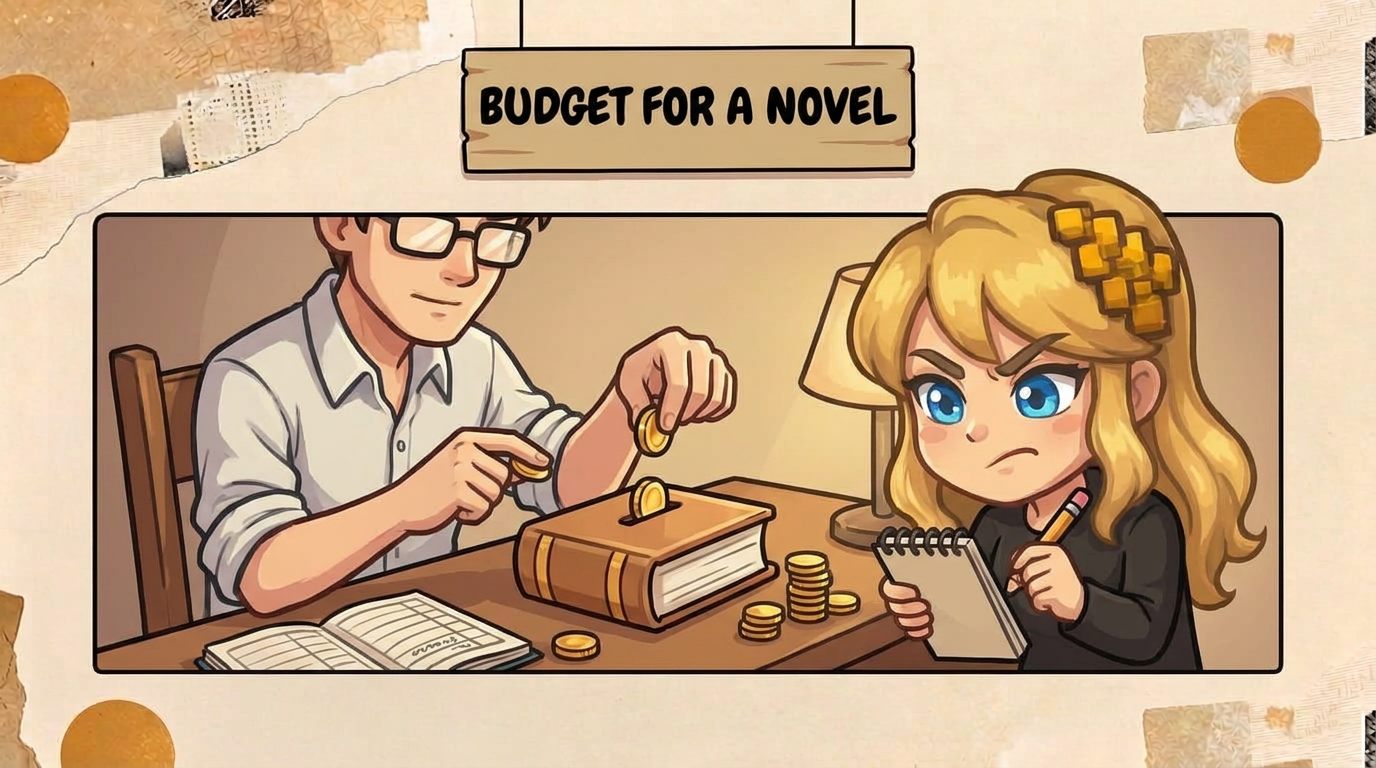
How do you budget feedback for a novel?
A plan that spends the most where it counts:
| Stage | Feedback | Typical cost |
|---|---|---|
| While drafting and revising | An AI reader on each chapter as you go, and on the whole draft at the end | Free to €20 a month |
| First full draft | Two or three volunteer beta readers | Free |
| Revised draft | A manuscript assessment, or a developmental edit if you can afford one | $1,350 to $4,800 |
| Final draft | Copyediting and proofreading, if you self-publish | $2,900 to $4,200 for both |
Writers going to agents usually stop after the assessment: a publisher pays for the copyedit. Self-publishers need the last row too.
When should you pay a human?
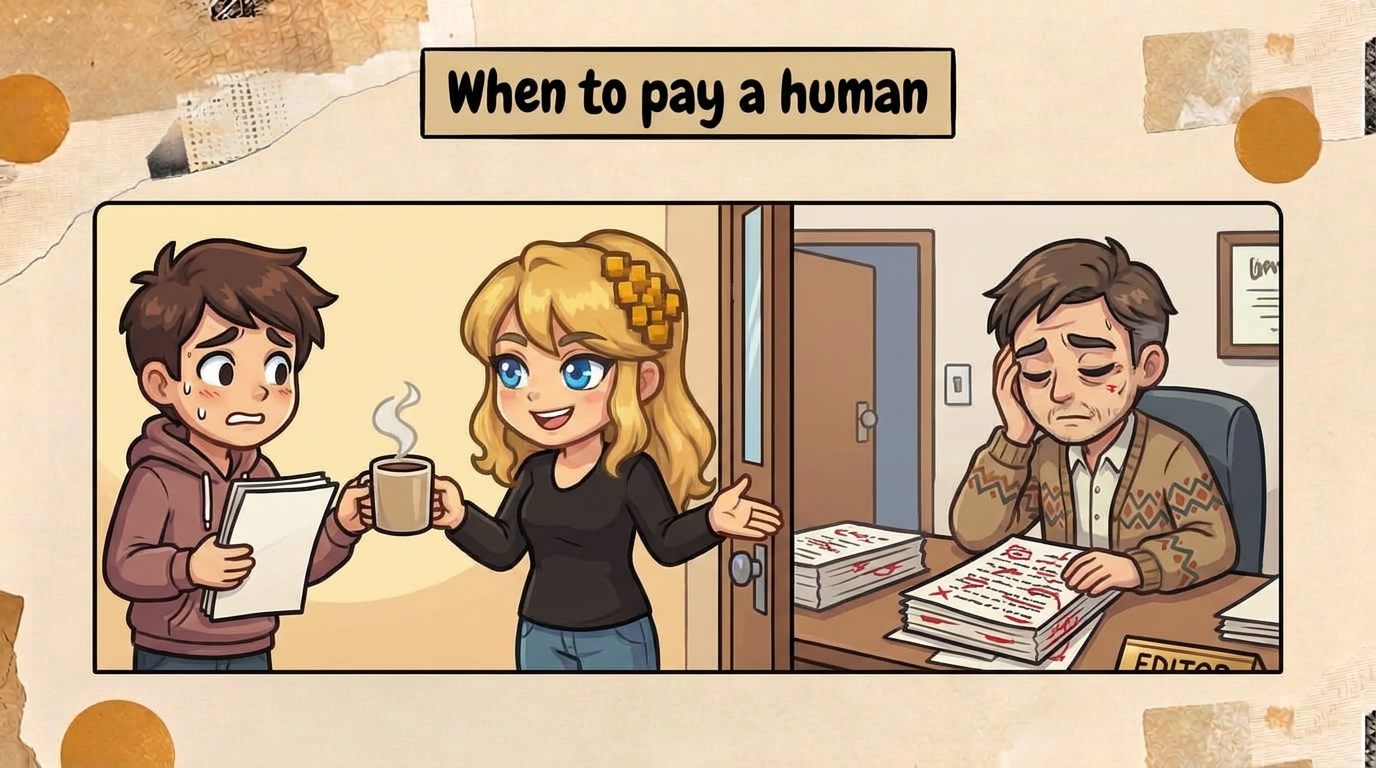
- When the story is as good as you can make it alone. An assessment on a first draft pays a professional to tell you what a free reader could have.
- When you’re querying agents or self-publishing. Both put the book in front of strangers who won’t give it a second chance.
- When AI and beta readers disagree, or you can’t tell which notes to trust.
- When the book depends on expertise a general reader doesn’t have: a genre’s conventions, a community you write about, a market.
Is it worth paying for feedback at all?
If you write for yourself, free readers and an AI reader are enough. If the book is your way into a career, one professional read at the right moment is the best money you’ll spend on it, and a cheap reader before it is how you make sure that moment is the right one.
Sources
All checked 25 November 2026.
- Editorial Freelancers Association, Editorial Rates (2026 chart).
- Reedsy, How much does editing cost? (updated 9 February 2026), Developmental editing and Beta readers.
- The Literary Consultancy, Fees and submissions.
- Jericho Writers, Manuscript assessment.
- Authors A.I., FAQ and Pricing.
- ProWritingAid, Story Credits.
- Literess, pricing and our continuity test.
Co-founder, Literess
Co-founder of Literess and of its sister product, Transept. Three degrees in English Language and Literature (Kyiv, Ostrava, and a year in Salzburg), and a Ukrainian native who lives most of her writing life in English. Came into AI as a prompt engineer, then product and lifecycle marketing. She writes semi-fictional stories about real people.
Co-founder, Literess
Builds Literess, and co-founded its sister product, Transept. Writes as “Mevkh.” A Language and Literature degree, then a turn into software: a senior AI engineer shipping production LLM features to 50,000+ users. A novelist on the slow path, with 120,000 words of satirical romance fantasy in a drawer, which is the manuscript Literess was first built to read.