 Literess
The best AI beta readers for a novel, and what they can’t do
Literess, Marlowe, ProWritingAid’s Virtual Beta Reader, AutoCrit, Fictionary, Sudowrite and the big chatbots, compared on a whole manuscript: what each tells you, how long it takes, what it costs, and where human beta readers still win.
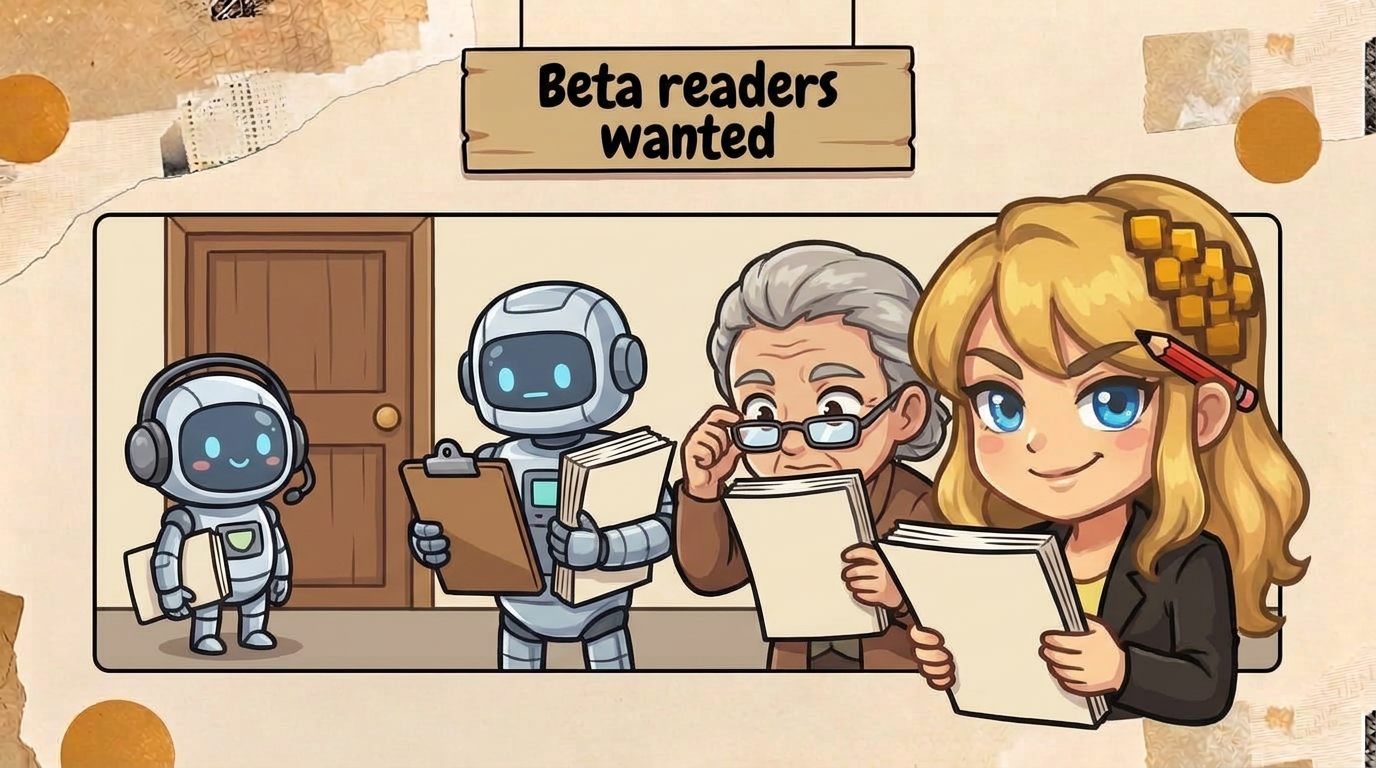
A beta reader is the first person to read your book as a reader, not as an editor: they tell you where they got lost, what they didn’t believe and where they put it down. Human beta readers are usually volunteers, and they take weeks. AI beta readers answer in minutes, read the same chapter as often as you rewrite it, and never get tired of your middle act. They can’t tell you how a person who picked up your book felt, and that is the part to keep human.
What should an AI beta reader tell you?
What a good human beta reader tells you, with the evidence:
- Where it lost them, and on which page.
- What they didn’t believe: a motive, a coincidence, a character’s change of heart.
- What confused them: who someone was, when a scene happens, what a term means.
- What contradicts itself: a fact on page 200 that page 20 made impossible.
- What they want to know next, which tells you whether your hooks work.
A report that only scores your pacing can’t answer most of these. A conversation can, if the reader has read the whole book.
How do the AI beta readers compare?
| Reader | How you get feedback | Reads a whole novel | Writes prose for you | Turnaround | Price for one 90,000-word novel |
|---|---|---|---|---|---|
| Literess | Conversation and margin threads, about any page | Yes, page by page | No | Minutes per question | Free plan; paid from €10 a month |
| Marlowe | A written report | Yes, Word or EPUB | No | A few minutes | $29.95 a report |
| ProWritingAid Virtual Beta Reader | A written report | Yes, up to 300,000 words | Rewords what you select | A few minutes | $50 a report at list price |
| AutoCrit | Analysis dashboards and scores | Yes | No | Minutes | $30 a month (Pro) |
| Fictionary | Notes per scene | Yes, Word | No | Minutes per scene | $49 a month, billed yearly |
| Sudowrite Feedback | Notes on a passage | Up to about 120,000 words imported | Yes | Minutes | From $22 a month (Professional) |
| ChatGPT, Claude, Gemini | A conversation about what you attach | Yes, as a file | Yes | Minutes | Free; about $20 a month for more |
| Human beta readers | Notes, a call, a questionnaire | Yes | No | Weeks | Usually free; paid ones 0.5 to 0.8 cents a word |
Vendor prices in US dollars except Literess (euros, VAT included) from each vendor’s own pages, checked 25 November 2026. The paid beta-reading rate is the Editorial Freelancers Association’s 2026 median range.

Can AI beta readers catch continuity errors?
The good ones can, if they read the whole book. We tested that directly: we planted ten contradictions in a 27,500-word novel draft, each 4 to 12 chapters after the fact it breaks, and asked five readers the same question.
| Reader | Planted slips found (of 10) |
|---|---|
| Literess, Standard (the model Free runs on) | 10 |
| Literess, Pro | 10 |
| Claude app, paid plan | 10 |
| ChatGPT, free plan | 6 |
| Gemini app, paid plan | 4 |
Four of the five also found a real slip the author had missed. The full test has every planted line and what each reader said.
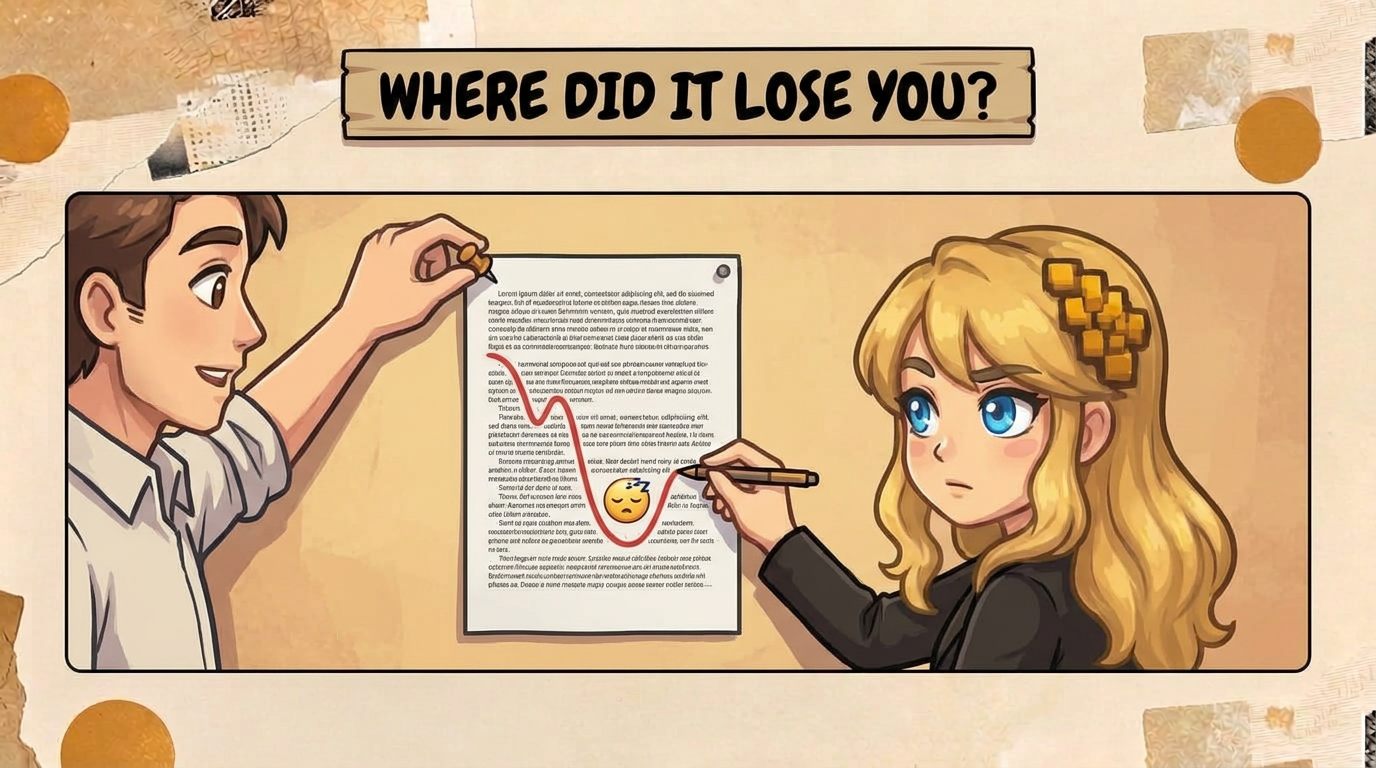
Literess: a beta reader you can talk to
Literess reads your manuscript page by page and answers as a first reader would, in the chat or in a thread beside the line. Ask where the middle lost her, whether a reveal lands, or whether chapter 12 contradicts chapter 3; each point links to its line. She keeps notes on your cast between sessions, and a story map of what each scene establishes. Her line edits, when you ask for them, arrive as suggestions you accept or reject; she has no tool for drafting scenes.
Best for writers who want to keep talking to the same reader while they revise. Free gives 10,000 credits a month; a whole-book read of a 27,500-word draft in our test used 2,950.
Marlowe: one report, fast
Marlowe, from Authors A.I., reads a whole manuscript and returns a developmental report on plot, pacing, characters and structure, in a few minutes. It never rewrites your text, and Authors A.I. says it doesn’t train on your manuscript. Marlowe Basic is free; Pro is $29.95 a report.
Best for an inexpensive snapshot of a finished draft before you pay a human editor.
ProWritingAid’s Virtual Beta Reader: a report on reader response
ProWritingAid’s report reads a finished story of up to 300,000 words and covers engagement, emotional impact and how the reading experience flows. Each report costs a Story Credit, $50 at list price; credits aren’t included in any subscription.
Best for writers already using ProWritingAid for line edits.
AutoCrit: patterns and scores
AutoCrit analyses your whole manuscript against patterns in published fiction, including automated alpha and beta readers and a score, on its Pro plan. Its reports are algorithmic, with no generative AI, and it won’t draft prose.
Best for writers who want numbers on pacing, dialogue and repetition.
Fictionary: scene by scene
Fictionary breaks your manuscript into scenes and checks each one’s purpose, point of view and goals; its AI editor, Edwina, gives notes on scenes rather than lines.
Best for a structural revision once the draft exists.
Sudowrite Feedback: notes beside a co-writer
Sudowrite’s Feedback gives notes on a passage, and its Professional and Max plans include developmental edits, line edits and beta reads. Sudowrite is built to draft prose with you, so the feedback sits next to tools that write.
Best for writers already drafting with Sudowrite.
ChatGPT, Claude and Gemini: the general readers
Attach your manuscript and ask for beta-reader notes, and all three will answer. How well they read a whole book differed in our test: on the same draft, the Claude app found all ten planted contradictions, free ChatGPT six and the Gemini app four. Each has its own terms for training on what you upload; check them before you share an unpublished book.
Best for a free second opinion on a chapter.
What can’t an AI beta reader do?
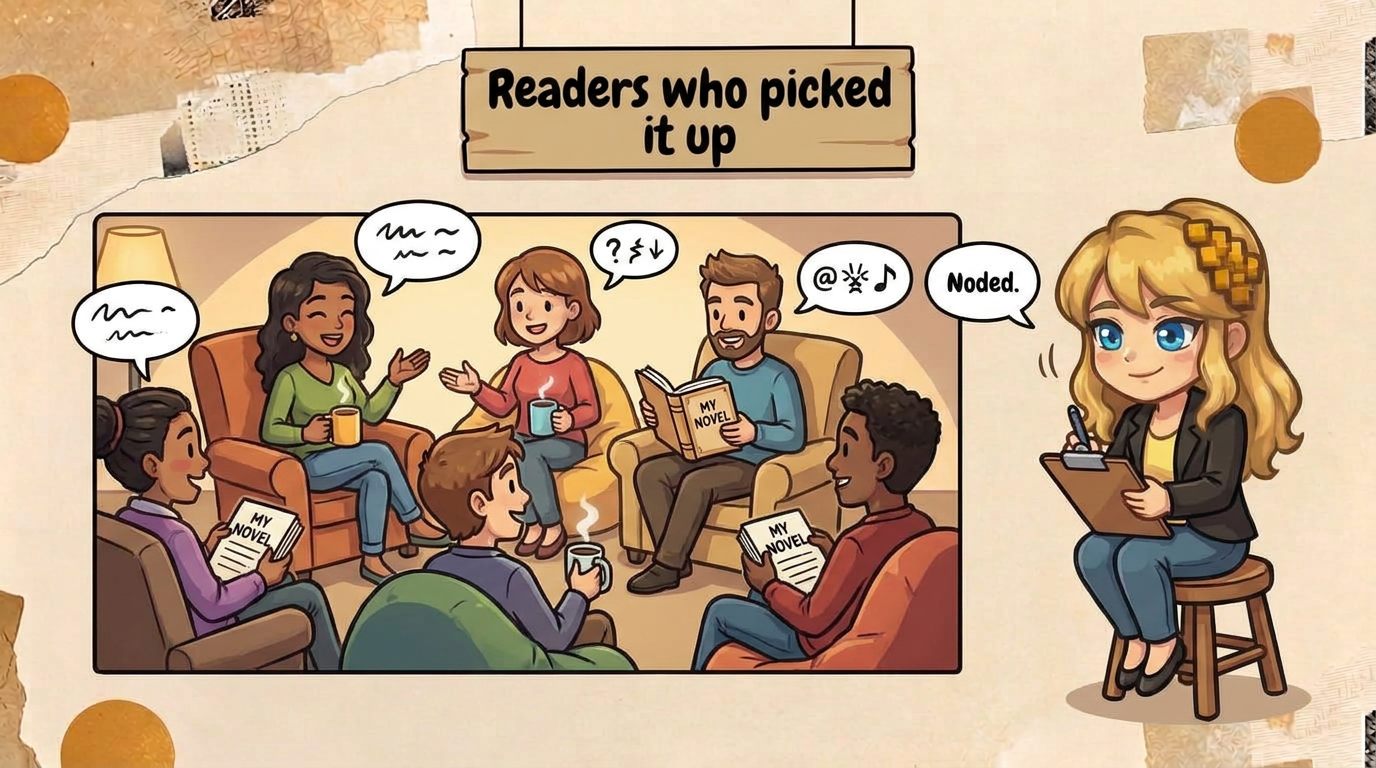
- Tell you how a stranger felt. A human who chose to pick up your book and didn’t put it down is evidence no model can give.
- Represent your audience. A thriller reader, a teenager, a reader from the community you write about: find them.
- Be surprised. A model has read every trope; a person still gasps at the right twist.
Use an AI reader while the draft is changing, as often as you rewrite, and send the steadier draft to human beta readers. They are usually volunteers, so their time is the scarce part. What feedback costs compares the options by price.
Sources
All checked 25 November 2026.
- Authors A.I., Pricing, FAQ and Marlowe.
- ProWritingAid, Story Credits and How do I use the Virtual Beta Reader?.
- AutoCrit, Pricing and FAQs.
- Fictionary, Pricing and home page.
- Sudowrite, Pricing.
- OpenAI, ChatGPT pricing; Anthropic, Claude pricing; Google, Gemini subscriptions.
- Editorial Freelancers Association, 2026 rate chart.
- Reedsy, Beta readers.
- Literess, our continuity test.

Co-founder, Literess
Co-founder of Literess and of its sister product, Transept. Three degrees in English Language and Literature (Kyiv, Ostrava, and a year in Salzburg), and a Ukrainian native who lives most of her writing life in English. Came into AI as a prompt engineer, then product and lifecycle marketing. She writes semi-fictional stories about real people.